The Tyranny of Opportunity: Why Limitation Creates Better Photographs
Many photographers believe their biggest challenge is finding opportunities.
A new location. More dramatic conditions. A different lens.
But the truth is, landscape photographers face the age-old problem of infinite possibilities and finite time.
Presented with so many possibilities, it's easy to become paralysed by choice. Which location should you visit? Which subject do you focus on? What story do you want to tell?
Some respond by adopting a spray-and-pray approach, taking hundreds of photographs in the hope that one will succeed. Others become so overwhelmed by the possibilities that they fail to press the shutter at all.
Either way, too much opportunity becomes the enemy of meaningful work.
Jack of All Trades (Master of None)
The biggest obstacle to meaningful work is often a failure to specialise.
Many photographers spend their lives chasing variety. One weekend, they photograph landscapes. The next, wildlife. Then street photography. Then macro.
While there is nothing wrong with experimentation, mastery requires focus.
The problem is that every time we move on to something new, we return to the beginning of the learning curve. Our time is spent discovering new subjects rather than trying to truly understand the ones we’ve already found.
As a result, our portfolios often feel like a collection of unrelated photographs. One image has little connection to the next. There is no obvious thread running through the work.
And worst of all, while we become competent at many things, we rarely become exceptional at any of them.
Define Your Boundaries
So how do we avoid this trap?
The solution is surprisingly simple: deliberately reduce your options. The answer is not to seek more opportunities. It is to ignore most of them.
Henri Cartier-Bresson's greatest work came from a lifelong fascination with people and the fleeting moments of everyday life. Edward Weston photographed everything from landscapes to nudes, yet his most celebrated work emerged from years spent exploring form, shape and simplicity. Ansel Adams became synonymous with the American wilderness because he devoted himself to understanding it.
The pattern is difficult to ignore. The photographers who leave the deepest mark are rarely those who try to photograph everything. They are those who commit themselves to a particular way of seeing.
Limitation creates familiarity. Familiarity creates understanding. And understanding is the foundation upon which meaningful work is built.
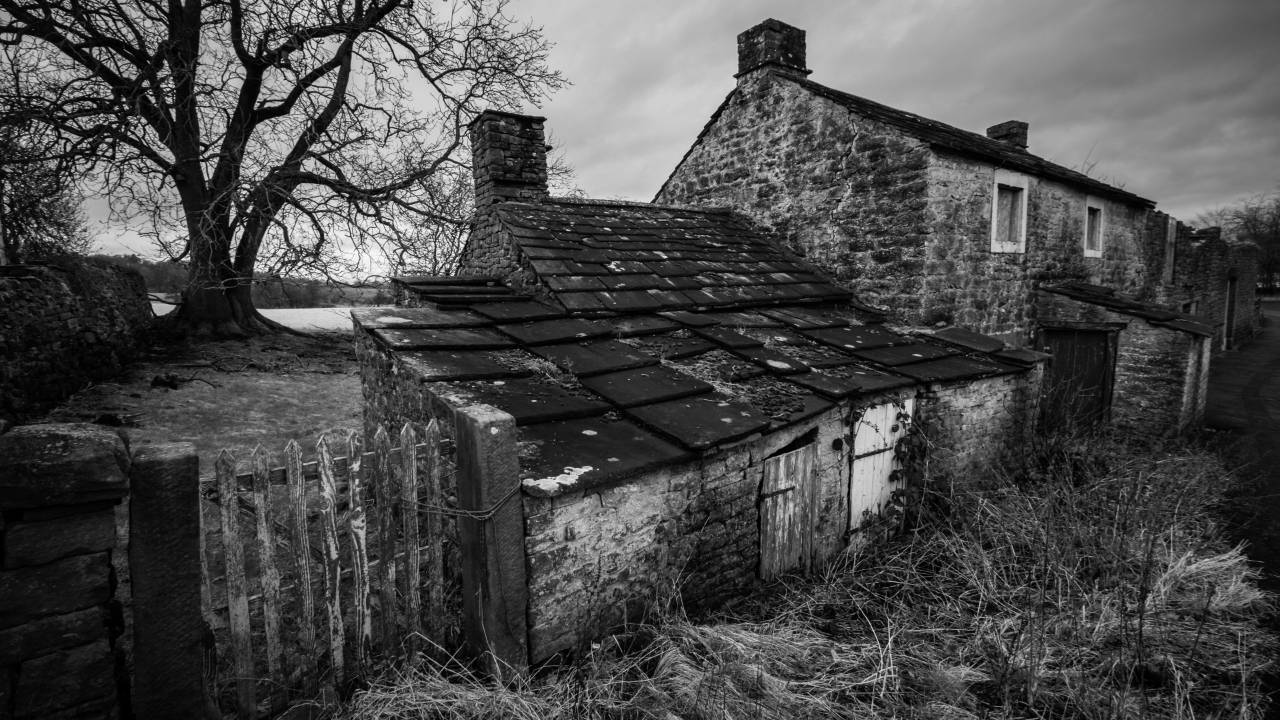
Most recently, I saw a significant improvement in my work when I stopped trying to photograph the North Pennines and began focusing on stories of our crumbling cultural heritage.
The most effective way to improve your photography is not to broaden your interests, but to deepen them.
Limitation Creates Style
Many photographers believe style is something that happens in post-processing. A particular preset. A colour palette. A way of editing.
But style is little more than consistency. Consistency of subject. Consistency of narrative. Consistency of composition. Even consistency of conditions.
When we repeatedly return to the same subjects, we begin to develop preferences. Certain stories resonate with us. Certain compositions feel more natural. Certain types of light better suit what we have to say.
Over time, those preferences become habits. And those habits become style.
By focusing our attention, we gradually create work that could only have been made by us.
There is no shortage of photographic opportunities. If anything, the modern photographer has access to too much of it.
The challenge is not finding more locations, more subjects or more possibilities. The challenge is deciding which opportunities deserve your attention.
The photographers who create the most meaningful work are rarely those who try to photograph everything. They are those who commit themselves to a particular way of seeing and give themselves the time to explore it fully.
Because while opportunity expands our horizons, limitation gives us direction. And without direction, all possibilities eventually become distractions.

Responses