Lost in the Scroll: Why “Good” Isn’t Enough
In the age of social media, we are bombarded by wonderful photographs on a daily basis.
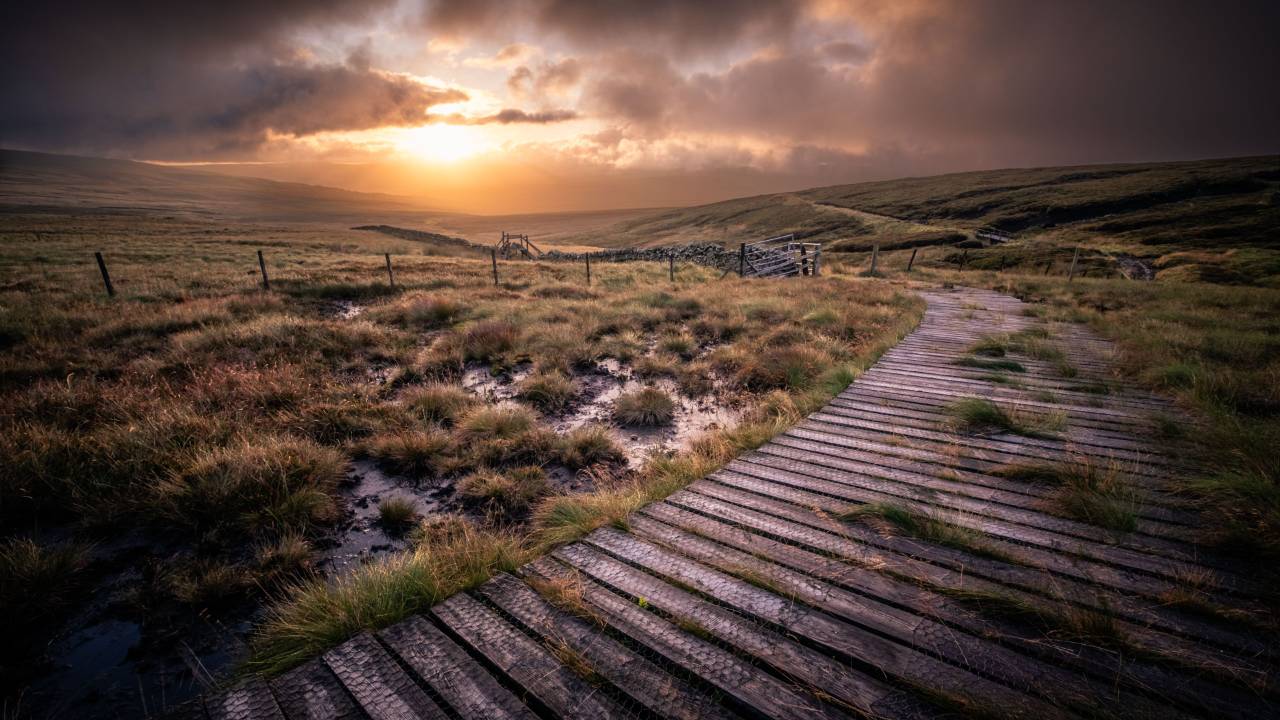
Many are of dramatic scenes, bathed in beautiful light. The sort of thing we all recognise as a “good” landscape photograph.
Twenty years ago, they would have stopped us in our tracks. But today, they barely register.
As more and more images shout for our attention, we are becoming deaf to what they have to say.
The awesome has become the everyday.
But every now and then, something stands out. Stops the scroll. Not because it’s better, but because there’s something familiar about it.
We may never have seen the scene before… but we recognise who took it.
More Than Just an Image
This isn’t an accident.
As photographers mature, a consistency begins to emerge in their work. Their unique style becomes increasingly recognisable.
Psychologists call this the mere exposure effect — we’re drawn to what’s familiar.
But it goes deeper than that.
A parent will always cherish their child’s artwork, even if it’s no better than anyone else’s — not because of what it is, but because of where it came from.
The same thing is happening here.
When a photograph stops us, it’s often not just the image we’re responding to… but the person behind it.
Provenance Matters
In his TED Talk, The Origins of Pleasure, psychologist Paul Bloom argues that how we respond to things is shaped by what we believe about their nature — what they’re made from, and where they came from.
In other words, origin matters.
The same is true of photography. Our response to an image changes depending on who pressed the shutter.
A print by Michael Kenna can sell for thousands of dollars. But an identical image, generated by AI, is essentially worthless.
If anything, that realisation alone should give us all hope for the future.
More Than Pretty Pictures
Once we understand how much origin matters, we can lean into it.
Much of the joy in photography comes from the connections we make. Not just with our subject, but with the people who connect with what we have to say.
In practical terms, this means sharing more about ourselves and what drives us — particularly the context in which our work is made.
Is there anything more boring than, “I went here and took this picture”?
What people really care about is why.
Because it’s not what we did that binds us together, but what we value.
And that’s what creates connection.
Ansel Adams once said, “There are always two people in every picture: the photographer and the viewer.”
What gives a photograph its meaning isn’t just what we see, but who saw it. The moment you make it all about the viewer, you lose something essential.
And without that… we might as well just use AI.
This article was inspired by a comment left by Krzysztof (aka Chris) on a recent Reel I posted on Instagram. Thank you for the inspiration.


Responses